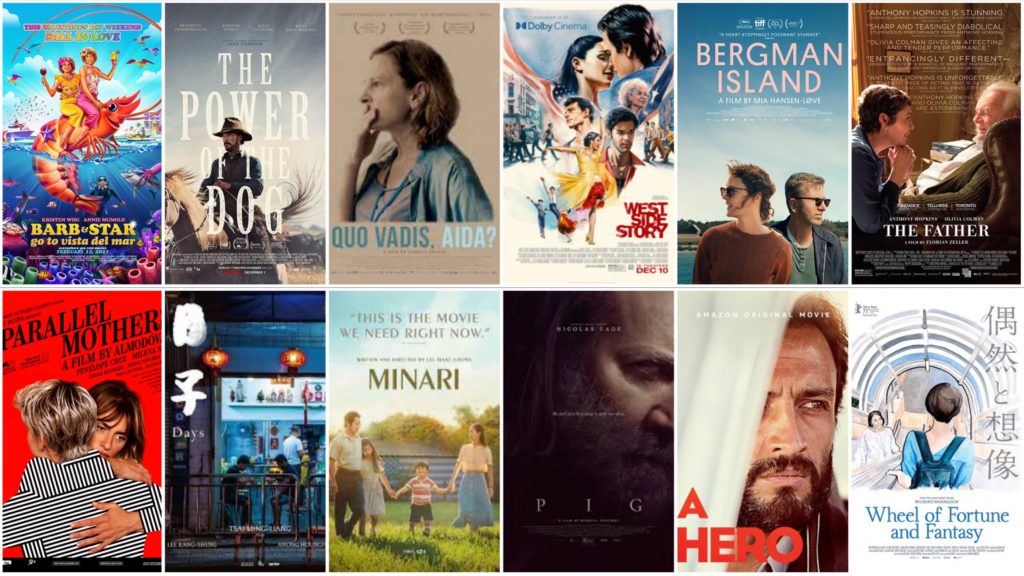
Writing about my favorite movies of the year is one of my favorite traditions. Even when it comes a month late, and even if I wind up having seen fewer movies than I’d have liked, it’s always a cathartic experience; a means of releasing that twelve month period into my memory. Writing about the movies I saw along the way helps me manage this.

To that point, it’s been a fucking weird year. I was hoping 2022 would be a large improvement over 2021. In some ways it has been. A return to work: a return to movie theaters, a return to certain semblances of life. It’s also been a year where things seemed not to have improved. Seemingly unending strings of COVID variants, alternating moments of false hope things would return to something that could be rounded up to normal. A laundry list of things I wanted to do in my year (travels, reading, hobbies, writing) but never made time for.
I think this list mirrors my sentiments of the last year. Lots of movies on my shortlist were ones I saw in theaters, but not all. Some reflected instances of pure and affirming joy about a world I love. Others that spoke to my frustrations with a world that consistently disappoints. And a lot of movies I wanted to see (particularly nonfiction, international features, movies made by artists from communities not my own) that I never quite got around to.

It’s also weird in another way. Just as this pandemic caused 2020 to bleed into 2021, so have some choices on this list. As a result of quirky release schedules, there are some noteworthy movies in my top ten that were released before I made my list last year, but I loved so much that I wanted to shout them out. At least two made my list. But on the off chance that annoys some folks, my top ten this year is now a top twelve. Just in case.
I see this list as reflective of another year in waiting, and another year in transition. Let’s see how the next one goes.
Movies I’ve Yet to See
|
|
The Runners-Up (#13 – #27)

Annette (dir. Leos Carax) — In a year resplendent with musicals, among the most enjoyable for me was the ugly-sounding one with the creepy marionette baby. Ignited by a great opening number and propelled by Adam Driver’s characteristic intensity, it’s a movie musical like few others. There’s a good chance you’ll hate it.
Benedetta (dir. Paul Verhoeven) — The director of Showgirls will never not be the director of Showgirls, and bless him for that. The cheekily-labeled lesbian nun movie is a gloriously vulgar and raunchy examination of spirituality and religious charlatanism which, like Elle before it, gets only the thinnest of veils in prestige aesthetic trappings. You’ll never again be able to look the Virgin Mary straight in the eyes.
C’mon C’mon (dir. Mike Mills) — It’s no coincidence the first Mike Mills movie I unreservedly like is the one where his film language is most pared-down. For once he trusts wholesale in his great strength—his writing—and the result is a beautifully muted family drama about the joys and tribulations of carving an uncertain path through [waves hand] all of this.

The Card Counter (dir. Paul Schrader) — Downbeat and at times morose, this story of a professional gambler doubles as a surprising reckoning of America’s sins of the past two decades. It’s a bummer, but it gives Oscar Isaac his juiciest performance since before Disney sent him to space.
The Dig (dir. Simon Stone) — “We all fail. Every day.” In one of the year’s early surprises (unforgivably buried in Netflix’s algorithm industrial complex), Stone’s gorgeously photographed historical drama about a major anthropological discovery doubles as a touching meditation about the enduring and the impermanent.
The Disciple (dir. Chaitanya Tamhane) — A strikingly well-shot movie about an Indian classical musician grappling with his lack of success and perhaps, in a tougher pill to swallow, a lack of talent. Tamhane finds a way to respect the artist without romanticizing them, and gently innovates a point that not everybody who creates can be great at it. And that’s not the end of the world.

Drive My Car (dir. Ryusuke Hamaguchi) — A simple yet exceedingly rich story about mourning, grief, and our fundamental inability to know everything even about the people we love the most—and conversely, how none of us can be everything to those same people. For more on Hamaguchi, keep reading.
Flee (dir. Jonas Poher Rasmussen) — Simultaneously topping my pathetically brief list of 2021 nonfiction and animated films I saw. Rasmussen patiently and absorbingly uses animation to recount the memoirs of Amin, his family’s hardships fleeing to Europe from the Mujahideen, and how his sexuality intersects with all that. A moving marriage of form and content.
Nine Days (dir. Edson Oda) — This gorgeously filmed indie fantasy about the bureaucratic process of electing a soul to the living world reveals itself as a surprising critique of the prescriptive ways we assign meaningfulness to a life. Winston Duke, playing the prescriptive bureaucrat at the film’s center, gets his best acting showcase yet.

Passing (dir. Rebecca Hall) — A swooning and cinematic interpretation of a literary landmark, Hall’s gorgeously assured debut employs old-school technique to tackle sophisticated themes around the dialogue between desire and identity. Ruth Negga is rightly getting acclaim, but don’t forget Tessa Thompson, delivering a year-best performance.
Shiva Baby (dir. Emma Seligman) — The year’s most stressful experience, packed tightly into an eighty-minute pressure-cooker of a movie, this story of an aimless twenty-something at Shiva and encountering hostile family, friends, lovers, and lovers’ wives may sound like sitcom fodder. But while it’s all very funny, most sitcoms don’t leave such a hard pit in the stomach.
Spencer (dir. Pablo Larraín) — It’s hardly my observation to say this is less a period drama than psychological thriller. But there really isn’t a more apt description. Larraín’s take on Princess Diana’s fraught life with the Royals builds on his Jackie success of juicing from viewers empathy for public figures too-often dismissed as publicity or tabloid fodder. Kristen Stewart gets a prestige showcase worthy of her skill.
This is Not a Burial, It’s a Resurrection (dir. Lemohang Jeremiah Mosese) — In possibly the best-shot movie of the year, featuring the late Mary Twyla in possibly the best performance of the year, this story of an elderly Lesothan woman fighting to rescue her family’s gravesite from the “progress” of industry is a beguiling yet potent story of heritage and mourning and protest.
The Tragedy of Macbeth (dir. Joel Coen) — Ethan who? This mostly-straight Shakespeare adaptation, and a rare truly-solo venture by a Coen brother, is a gallantly expressionistic display of visuals and craft. A staging outmatched only by the awesomely assembled stages themselves, and performances that deftly straddle the classic and the modern.
Zola (dir. Janicza Bravo) — Let Zola’s distinction as maybe the first-ever film adapted from a Twitter thread to entice you, not discourage you. Boldly, uproariously modern in theme and sensibility, Bravo explores concepts of friendship, technology, white privilege, and personal truth with an incisiveness unique to her generation. Here’s hoping more filmmakers follow her lead.
The Best Movies of 2021
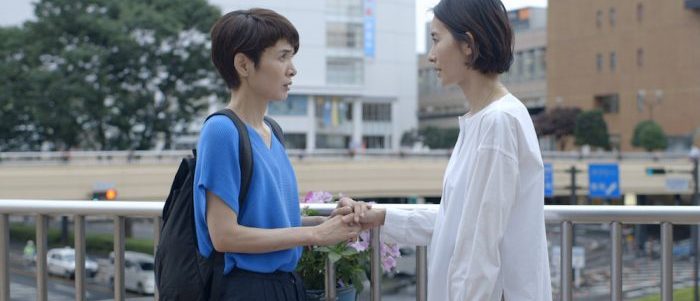
12) Wheel of Fortune and Fantasy (dir. Ryusuke Hamaguchi)
It’s awfully rude for one director to make four of the best movies of the year. With Drive My Car (see above) and this triptych on human (dis)connection and heartbreak, Hamaguchi this year has instantly justified his place in the echelon of essential working directors. Each of Wheel’s three segments tells a distinct, complete film: a couple reeling in different ways from a breakup, an abortive attempt at romantic blackmail, an unlikely reunion yielding an unlikelier kindredship. It’s tempting to parse Wheel’s three distinct segments and consider each one’s individual merits. But like the best anthology films, this one’s true richness is found in the connective tissue binding the stories. As the final story hits its climax, its connection to the other two snap into place, and Wheel of Fortune and Fantasy reveals itself as a heady, humanistic ode not just to the complexities our relationships and romances beget, but to the ways they ripple and charge meaning into the new ones we find.
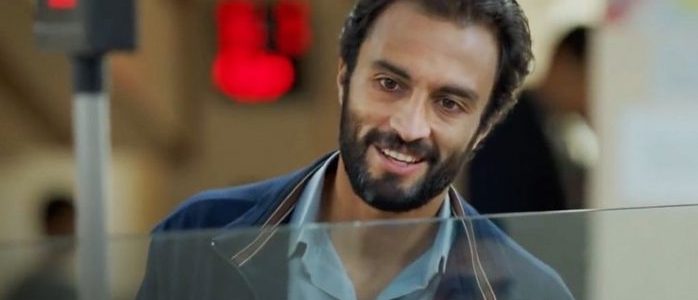
11) A Hero (dir. Asghar Farhadi)
Courtesy of international cinema’s most dependable brand, Farhadi’s latest is yet another masterfully crafted, soft-spoken yet acute examination of people wriggling within social systems. Even more than his masterpiece, A Separation, which embeds its narrative conflict in legal marasse, A Hero mires its protagonist in the gauzier social structures of morality. Amir Jadidi gives a subdued yet active performance as a man who leverages his act of ostensible Good Samaritanism to improve his situation as the ward of a debtor’s prison, but learns how quickly such hopes can backfire. As with every Farhadi work, the dramatic fulcrum here is the director’s patient, unflinching, unjudging sense of observation. No motivation comes from a place of pure good or pure evil, and no character comes from a place of complete knowability, even when what drives them is made utterly clear or whether they crave or repel audience sympathy. A Hero is a superb document of moral order, because it understands the chaos it can engender.
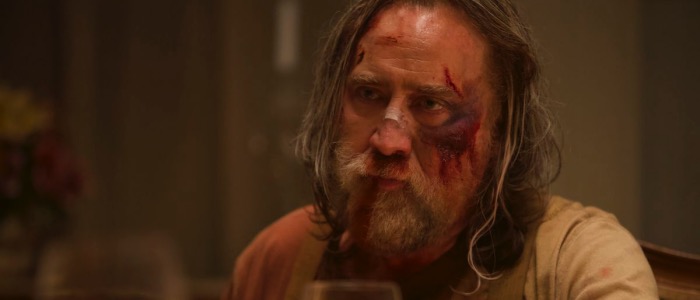
10) Pig (dir. Michael Sarnoski)
At this stage of a career where his signature approach involves shocking viewers with one mesmerizingly unhinged performance after another, it is Nicholas Cage’s delivery of one simple, unaffected line in Pig that shocks me most: “I love her.” In what I’ve been affectionately characterizing as John Wick by way of First Cow, Sarnoski’s wisely tempered and wryly heightened chronicle of a recluse scouring the Portland food service netherworld, in search of his kidnapped pet truffle pig, is a rescue movie like few others. The movie is consistently engaging and amusing, as Cage’s character leads his audience surrogate (a perpetually bemused Alex Wolff) in the search. What makes it truly special is its propulsive vision of love and of vocation. Pig is only a movie about rescuing a valuable pig until it reveals itself as a tender ode to the kind of sentiments that make our days pass with some semblance of meaning.

9) Minari (dir. Lee Isaac Chung)
Grand and intimate all at once, in all the ways the best feats of memoir achieve, Chung’s fictionalized expression of his youth—living with his Korean-American family and farming in the heartland—is more than a milquetoast paean to the immigrants who make this country. What makes Minari truly generous is how candidly Chung speaks truth to the hardships and the conflicts his family faces in their new home. As Jacob pushes his family to find their place in rural Arkansas, conflict arises in the ways shaping an American life serve to challenge, obviate, or even pervert the identities of those who opt in. But please don’t mistake Minari for some dour family drama; thanks to the familial chemistry of its ensemble—the innate charisma of young actors Alan S. Kim and Noel Cho, the intensity of Steven Yeun and Yeri Han, the delightful presence of Youn Yuh-jung—there is ample joy to balance the hardship. This may be an immigrant’s story. It is also a family story in its most loving sense.

8) Days (dir. Tsai Ming-liang)
Trite as it may be to describe stories as being about the vitality of human connections (I did so earlier in this very post), it really is worth pausing to consider just how miraculous even a fleeting encounter between two people is on a planet of seven billion. Whether by fate or circumstance or cosmic accident, even a connection at its most ephemeral or trivial cannot close itself entirely to a chance to find significance. It’s perhaps too far to call the mid-movie encounter between the two men of Days “trivial”—they appear, after all, to be engaging in a sex-work transaction—but it is certainly fleeting. And the movie bookending that encounter, composed entirely of the two lonely men going about their days, hints at significance in the contrast. The placid, nearly dialogue-free Days is a slow film, likely too slow for many. But for those who embrace its pace, its vision of connection will resonate deeply with a calmed mind.
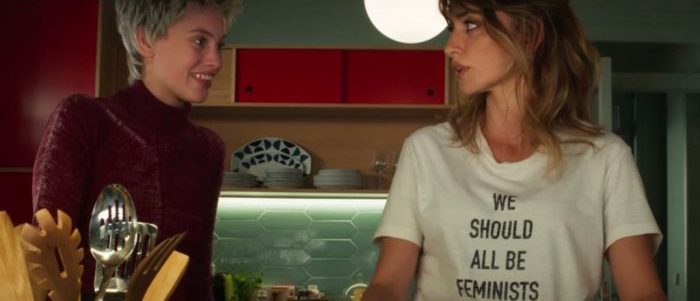
7) Parallel Mothers (dir. Pedro Almodóvar)
Almodóvar, the great Spanish director, is enjoying arguably the most slow-burning hot streak in the movies today. His past decade’s output has been replete with the same elements that made him a name: taboo themes, striking visuals, expertly heightened melodrama. All that still informs this late stage of his career, only now I sense a solemnity and maturity in lieu of brazenness. Parallel Mothers continues this, brandishing many of his signature melodramatic delights—queer and feminine sensibilities, splashy flairs of red, Penelope Cruz—as he tells a twisty story of two women sharing a hospital room as they give birth on the same day. Weighting the melodrama this time is a daring juxtaposition against the reverberations of the Spanish Civil War. Not all will buy into this juxtaposition; even I struggle to square Parallel Mothers’ parallel themes. But his pairing of human turmoils great and small, and the spectrum of legacies they leave, land a haunting and undeniable blow.
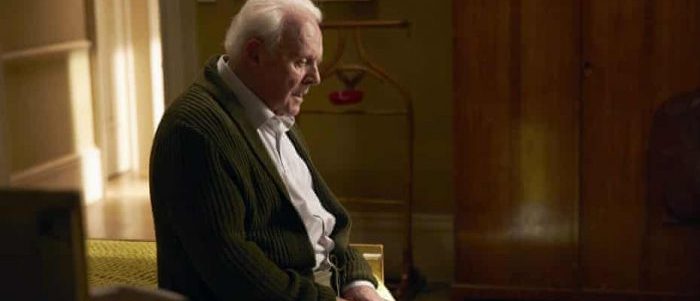
6) The Father (dir. Florian Zeller)
Among the year’s most striking, inventive acts of speculation, Zeller aims to dramatize the experience of an elderly man’s diminishing mental faculties with equal parts horror and empathy. He pulls out various formal stops to achieve this, most notably a script whose scenes deftly blur the lines parsing reality from imagination, supported by the production design of a large, tastefully decorated apartment whose halls and corners drift seamlessly and impossibly into each other, into a prison of the mind. It’s a nigh-impossible balancing act, at nearly every juncture The Father risks indulging pity and condescension. Maintaining the balance is Anthony Hopkins, who deservedly won a second Oscar for the nimbleness with which he humanizes his character’s confusion, frustration, and fleeting glimmers of his character’s old self. Hopkins helps his writer/director elevate what could so easily have been a cheap, gimmicky experiment into an ingenious and artful essay toward empathy.
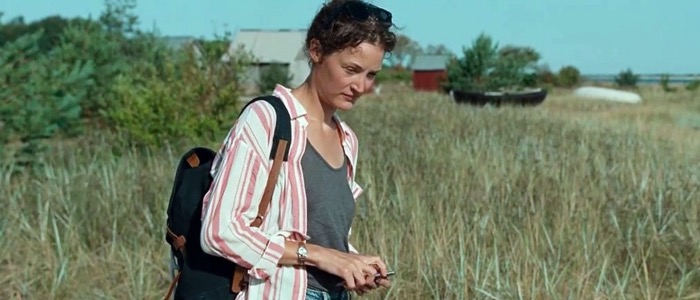
5) Bergman Island (dir. Mia Hansen-Løve)
To be creative means inevitably to engage in self-antipathy. To sit in a lonely room to purge no less than your vision of the universe, only to question whether you see anything at all. To seek instruction from great art and artists, only to despair how the fruits of your own labors will simply never compare. Hansen-Løve is one of those great artists from whose work taking such instruction is warranted. It speaks to her generosity that her latest would resonate so gently, yet firmly, to an artist’s uncertainty. In a quietly playful structure, the movie follows Vicky Krieps’ character as she accompanies her filmmaker husband to Farø Island—the erstwhile residence and creative canvas of Ingmar Bergman himself—to find inspiration, only to flail in all the recognizable ways. But as the film progresses, and the narrative unfolds into a surprising and moving meta-narrative, we begin to see how often inspiration may come not from around us, but within us. Bergman Island is a loving nudge to anyone who creates, yet doubts.
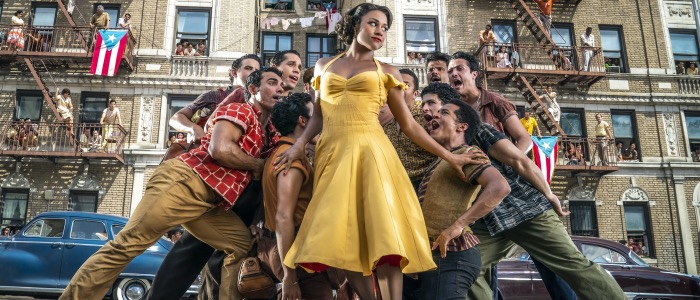
4) West Side Story (dir. Steven Spielberg)
For all the digital ink spilled asking why this director would bother to remake a beloved masterpiece, the answer turns out to be an awfully simple one: because he was moved to do so. Perhaps this new iteration of the Bernstein musical, even with more sensitive casting and a sharpened political perspective, did not “need” to be made. And perhaps this story about Puerto Rican immigrants, told from a white perspective and made by white creators, is best left completely in the past. I wouldn’t blame anybody for feeling this way.
But personally speaking, I cannot dismiss the urgency and passion apparent in every choice Spielberg makes, thus delivering a movie you can truly tell he’s been waiting his whole career to make. That’s a hell of a thing to say about the director who, more than most, has had every opportunity to do everything he ever wanted. The result of Spielberg’s passion is truly infectious, even if—like me—you’ve always been a little cool on this musical. But even more than passion, this West Side Story is an apotheosis of craft at every level imaginable; not just in direction, but in scripting from Tony Kushner (whose words invigorate Spielberg like few others), choreography from Justin Peck, expert craftsmanship from his collaborators Michael Kahn & Janusz Kaminski, and breakthrough performances from actors—Rachel Zegler, Ariana DeBose, David Alvarez, Mike Faist—I pray the silver screen won’t soon forget.
“Necessary” or not, this West Side Story is the most a movie this expensive has moved me in a very long time—possibly since The Last Jedi, and maybe since Fury Road. And all that money had to be sent on was the best artists in the world churning out their best work.
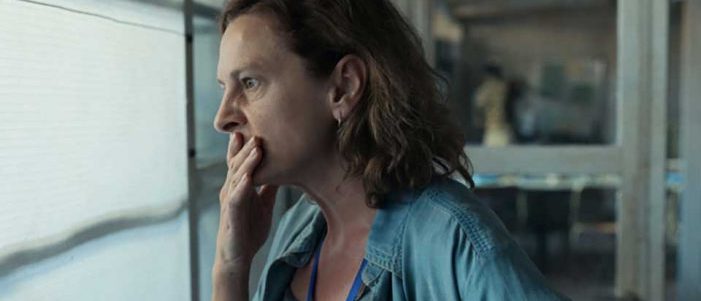
3) Quo Vadis, Aida? (dir. Jasmila Žbanić)
There is so much to be said of manmade atrocity—so much to ask about its root causes and to fear about how it speaks to our innermost natures—that the art that best speaks to it is the art that finds truth not in a larger perspective, but in the smaller moments. Žbanić’s urgent and diligent restaging of the hours prior to the Bosnian War’s Srebrenica massacre finds its truth by following Aida, a translator for the United Nations whose own family sits in limbo in a UN safety zone. Showing the atrocity through Aida’s eyes proves a shrewd choice, and not merely because Jasna Đuričić depicts her with such a methodically mounting intensity. This perspective brilliantly ushers the narrative across all levels of the political and humanitarian crisis, from feckless leadership to monstrous war criminals to doomed refugees, that would doom thousands to genocide. Žbanić mounts dread soberly, never losing sight of the human stakes, even as tragedy and travesty prove the clear inevitable outcome. Quo Vadis, Aida? is the most helpful kind of artistic social document: one that finds perspective in the moments.
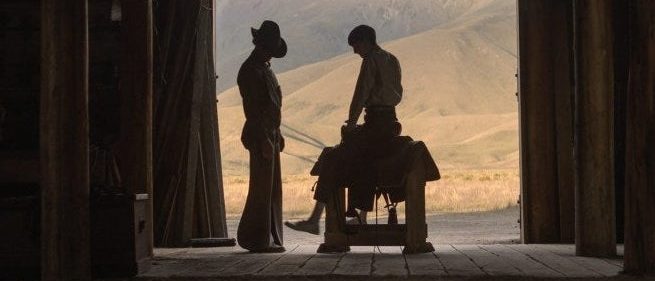
2) The Power of the Dog (dir. Jane Campion)
“Those were real men back then.” So laments Phil to Peter, casually yet wistfully regaling the life and the times of his mentor and hero, Bronco Henry. It’s a lamentation that comes late in the movie, and it comes as no surprise to hear it. Phil, the grizzled cattle rancher who spends much of The Power of the Dog bullying the lanky, lispy, effette Peter, and tormenting Peter’s mother Rose for marrying into his family, is a hateful little creature. “Hateful” meaning, he is full of hate; an admittedly brilliant man who treats his specific, learned performance of masculinity as a heritage and as a prescription to treat a world seemingly growing beyond him. He is hateful until you realize he is pitiable. But when he speaks to Peter, with words surely echoed from Bronco Henry, you realize he must be stopped.
Campion’s visually hypnotic neo-western doesn’t even try to mask its critique of a specific brand of masculinism—one we mostly shorthand today as “toxic masculinity”—into the subtext. It’s all in the text, in big, bold letters. It avoids reading as obvious treatise, however, thanks to the artful and novelistic approach with which the film explores the theme. Power of the Dog is, first and foremost, a story about characters living and squirming beside each other in a strange and alien western Rocky Mountain landscape (rendered more alien by Campion’s ingenious choice to shoot in New Zealand), and how those characters’ fundamental incompatibility come to roost. The film concludes at a fairly logical point. But it is nonetheless surprising because Campion earns it by charging every scene, every shot, every deceptively minute detail, with an eternity’s worth of thought and consideration.
As an indictment of masculinity, what Campion’s got to say may be familiar. But as an exploration of characters and theme—in other words, as a story—you’re hard pressed to find a better-crafted one this year.
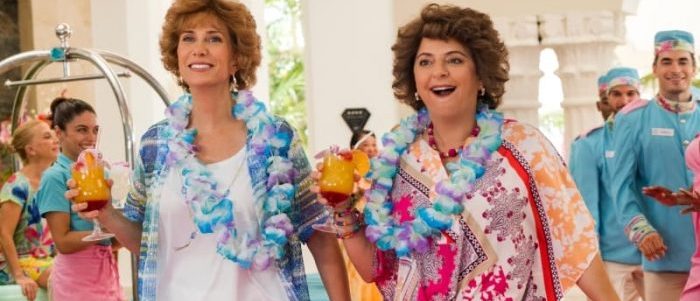
1) Barb & Star Go to Vista Del Mar (dir. Josh Greenbaum)
As somebody who enjoys writing film criticism, I generally have faith in my ability to use the written word to pay justice to even the most sublime and language-defying movie experiences. (If you’ve made it this far in my post, I hope you agree.) This year, however, it appears I have met my match in two middle-aged midwestern women wearing culottes and a water spirit named Trish.
Barb & Star defies any grand verbal proclamation of greatness; it truly must be seen to be believed. This second writerly effort of Kristen Wiig and Annie Mumolo—who also wrote Bridesmaids, my favorite recent American comedy until this one—is a deliriously absurd story of two women (also played by Wiig and Mumolo) hoping to reclaim their joy for life with a fabulous trip down to a beautiful seaside resort town for some sun, pool, drinks, and an overall tit-flapping good time. Unbeknownst to them is the looming threat of an evil criminal mastermind (Wiig yet again) eager to exact revenge on that very same town. I’d be remiss not to mention Jamie Dornan, giving here his best performance in a year where he’s getting awards buzz for a completely different movie.
Barb & Star’s cavalcade of bizarre gags, quotable moments, and confusing non-sequiturs march along at a breathless pace—meaning literally, laughter might render you breathless—in a manner I ordinarily would find exhausting. I’ve seen this movie three times (more than any other movie this year) and it’s yet to do anything but energize me. I think the reason is that, for all the energy it exerts to earn laughs, it can be easy to overlook the integrity of this movie, both in the script and in Greenbaum’s directing. While the characters are played broadly and absurdly, Wiig/Mumolo/Green demonstrate a surprising amount of clarity in what its characters’ needs are. Barb and Star may be a gag machine, but it is rooted in Barb and Star’s need to re-energize their lives and reaffirm their vitality after flailing careers and disappointing relationships and hot dog soup.
There is a sincere optimism undergirding Barb & Star in its most ridiculous moments, and an optimism that the Barb and Star in all of us deserve a little happiness. After the year or two we all had, that’s a message that went so deep, I think it touched my heart.